
What worked
Mapping the emotional arc first made every screen decision easier to defend.
Passenger Disruption Platform
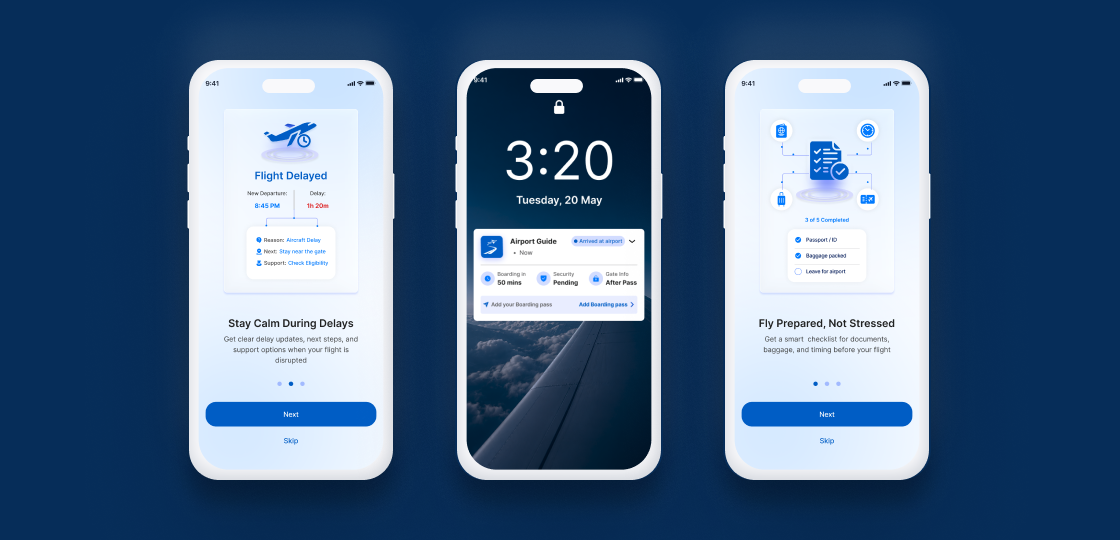
When flights are cancelled or delayed, passengers face fragmented information, long support queues and high anxiety. Skyde needed a guided path through disruption.
A practical product design process that turns research into clear, useful and measurable experiences. Expand to see the thinking.
Research, usability and outcome signals that show how product design moved the work forward.
Metrics marked “to be validated” are pending live measurement.
Passengers facing disruption had no consistent guided experience across channels.
Design a unified mobile-first journey that informs, calms and resolves.
Ran 5 user interviews, mapped the emotional journey, prototyped 3 directions, validated with usability testing.
A guided disruption flow that reduced uncertainty in testing; confidence rating averaged 4.5 / 5.
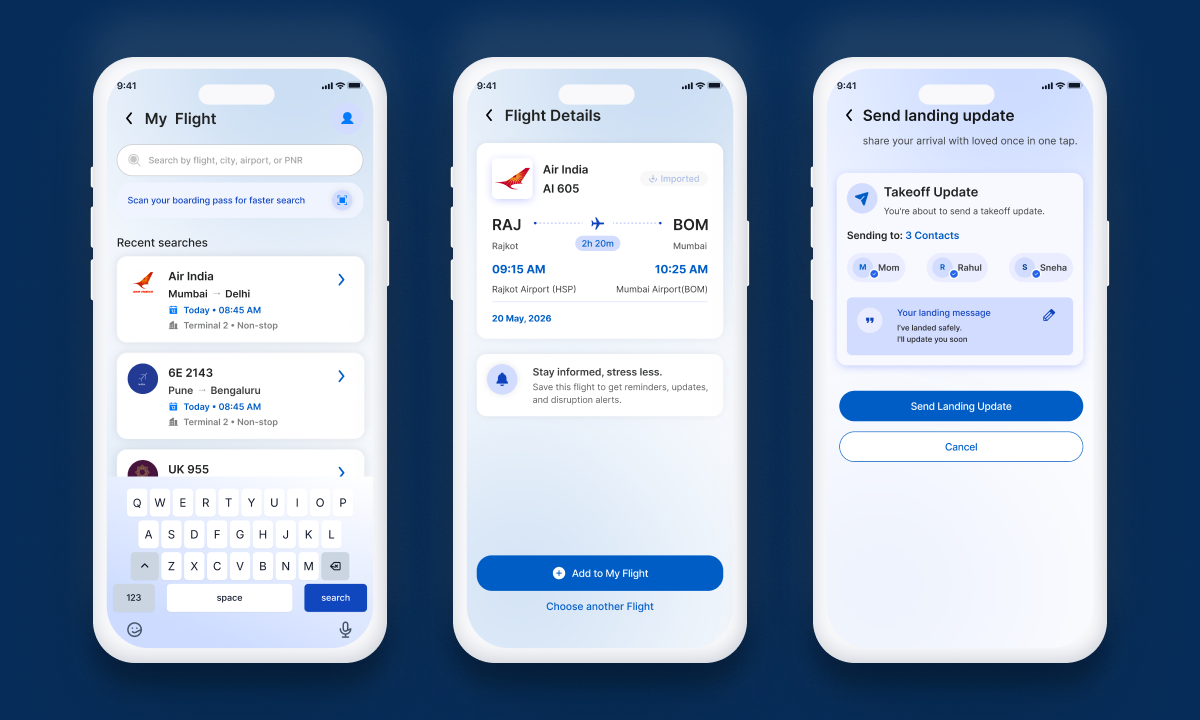
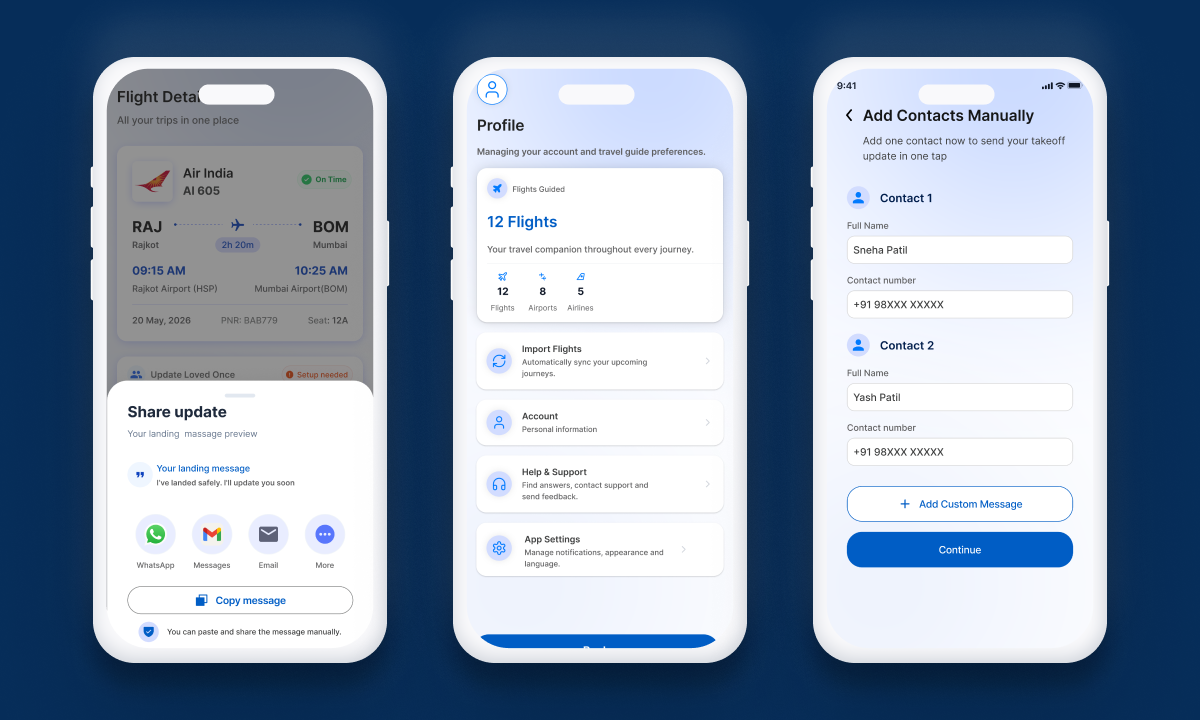
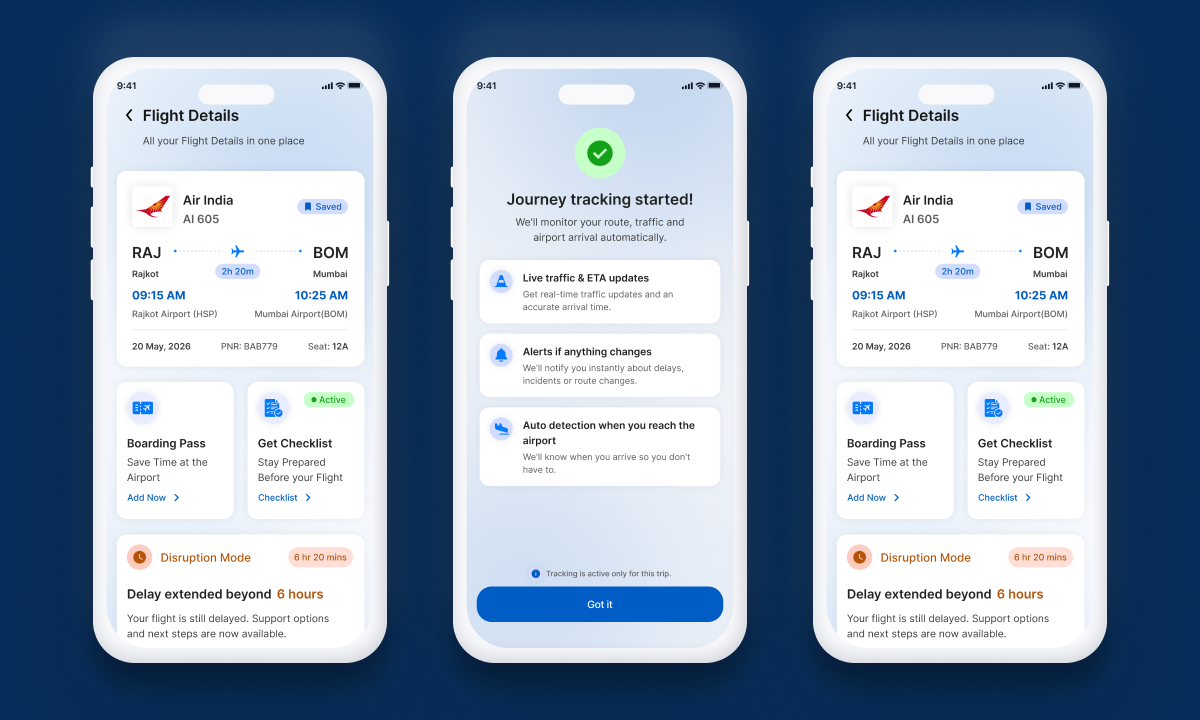
Mapping the emotional arc first made every screen decision easier to defend.
Earlier alignment with airline ops would unlock more realistic copy and edge cases.
Extend into proactive notifications and partner-airline rebooking.
Happy to walk through process, decisions and trade-offs in detail — say hello and I'll send a deep-dive.